- (604) 813-6382
- libertyapplianceservices@gmail.com
- Mon-Sun: 8am-8pm

September 18, 2026
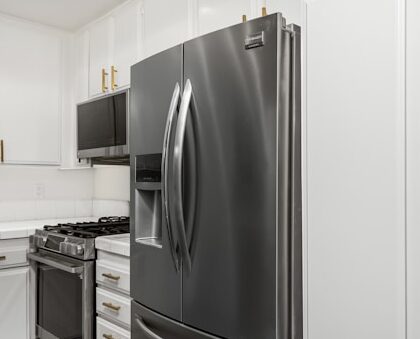
A refrigerator that suddenly stops cooling can be frustrating, especially when food and other perishables are at risk. In some cases, the problem may be something simple, such as a blocked vent, incorrect temperature setting, or dirty condenser coils. Other situations may indicate a mechanical or electrical problem that requires professional refrigerator repair.
Before calling a technician, there are several safe things you can check. This guide explains the most common reasons a refrigerator stops cooling, what you can look for, and when professional appliance repair is the better option.
Start with the simplest possibilities before assuming there is a major mechanical failure.
Check the temperature setting on your refrigerator. The recommended refrigerator temperature is generally around 37°F (3°C), while the freezer should typically be around 0°F (-18°C).
If the temperature was accidentally adjusted, the refrigerator may not cool properly. After correcting the setting, allow several hours for the appliance to reach the desired temperature.
If the refrigerator is completely silent and the interior light is not working, check whether it is receiving power.
Make sure:
• The power cord is securely connected
• The outlet is working
• The circuit breaker has not tripped
• The refrigerator’s controls have not been accidentally switched off
Avoid repeatedly resetting a breaker if it continues to trip. A recurring electrical problem should be inspected by a qualified professional.
Refrigerators rely on proper airflow to distribute cold air between the freezer and refrigerator compartments.
Food containers can sometimes block the vents inside the refrigerator, preventing cold air from circulating properly. Rearrange items so the vents are not covered and avoid packing the refrigerator too tightly.
Poor airflow can cause one area to remain cold while another becomes noticeably warmer.
Why Is My Refrigerator Running but Not Cooling?
If you can hear the refrigerator running but the inside is still warm, several problems could be responsible.
Common causes include:
• Dirty condenser coils
• Blocked air vents
• A malfunctioning evaporator fan
• A faulty condenser fan
• Damaged door seals
• Frost buildup
• A problem with the compressor
• A faulty thermostat or temperature sensor
• Refrigerant-related problems
The exact cause depends on the refrigerator model and symptoms.
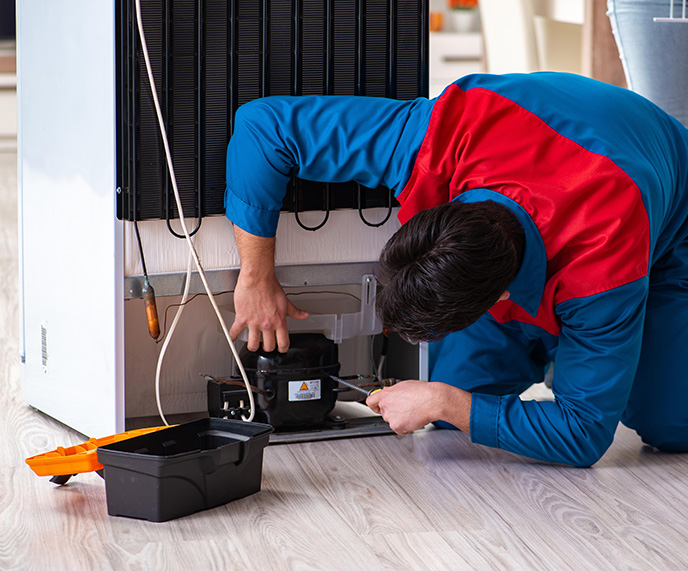
Yes. Dirty condenser coils can reduce a refrigerator’s ability to release heat, making the cooling system work harder. Condenser coils are typically located underneath or behind the refrigerator, although their location varies by model. Dust, pet hair, and debris can accumulate around them over time.
If the coils are accessible and the manufacturer’s instructions allow cleaning, you can carefully remove surface dust and debris.
Always disconnect the appliance from power before performing basic cleaning. If cleaning the coils does not improve cooling, the refrigerator may have another underlying problem.
When the freezer remains cold but the refrigerator compartment becomes warm, airflow is often one of the areas worth investigating.
Cold air produced in the freezer is circulated into the refrigerator compartment in many refrigerator designs. A blocked vent, malfunctioning fan, excessive frost, or an airflow control problem can interfere with this process.
Check whether food is blocking the vents and look for unusual frost buildup.
If the freezer is cold but the refrigerator remains warm after checking airflow, professional diagnosis may be necessary. Can a Bad Door Seal Cause a Refrigerator to Stop Cooling?
A damaged or loose door gasket can allow warm air to enter the refrigerator continuously. This makes the appliance work harder and can contribute to inconsistent temperatures.
Inspect the rubber gasket around the refrigerator and freezer doors for:
• Cracks
• Tears
• Gaps
• Loose sections
• Dirt or debris preventing a proper seal
A simple cleaning may help if dirt is preventing the door from closing properly. If the gasket is damaged, it may need to be replaced.
Excessive frost or ice buildup can interfere with airflow and prevent cold air from circulating correctly.This may be related to a defrost system problem, a faulty component, a door that is not sealing properly, or another issue affecting the appliance’s cooling cycle.
Do not use sharp objects to remove ice because they can damage internal components or refrigerant lines. If heavy frost repeatedly returns, refrigerator repair may be required to identify the underlying cause.
After changing the temperature setting, restoring power, or rearranging food to improve airflow, a refrigerator may need several hours to return to its normal operating temperature.
The exact time depends on the refrigerator’s condition, how long it has been warm, the amount of food inside, and the surrounding room temperature.
If the refrigerator remains warm after sufficient time, don’t assume that leaving it running longer will solve the problem. A cooling-system, fan, thermostat, compressor, or other component could be malfunctioning.
Some refrigerator sounds are normal. Fans, compressors, ice makers, and automatic defrost systems can all produce operating noises.
However, sudden or unusually loud sounds may indicate a problem.
Pay attention to sounds such as:
• Loud buzzing
• Grinding
• Repeated clicking
• Rattling
• Excessive vibration
• Fan noise that suddenly changes
The type and timing of the noise can help a technician identify which component may need attention.
You should consider professional refrigerator repair when basic checks do not resolve the cooling problem or when you notice signs of a mechanical or electrical failure.
Call a professional if:
• The refrigerator continues to stay warm.
• The compressor appears to run continuously.
• The appliance repeatedly trips the breaker.
• There is significant frost buildup.
• Fans are not operating properly.
• You hear unusual mechanical noises.
• The refrigerator is leaking.
• The appliance has a burning smell.
• Cooling problems keep returning.
Refrigerators contain electrical components and sealed cooling systems that should not be disassembled or repaired without the appropriate training and equipment.
In many cases, refrigerator repair can be worthwhile, particularly when the appliance has a relatively minor or replaceable component problem.
The decision depends on factors such as the refrigerator’s age, condition, repair cost, energy efficiency, and the nature of the failure.
A professional diagnosis can help you understand the problem before deciding whether repair or replacement makes more sense.
How Can You Prevent Refrigerator Cooling Problems?
Regular maintenance can help reduce avoidable refrigerator problems.
Consider these basic practices:
• Keep the refrigerator at the appropriate temperature.
• Avoid blocking interior air vents.
• Keep door seals clean and in good condition.
• Clean accessible condenser areas according to the manufacturer’s instructions.
• Avoid leaving refrigerator doors open unnecessarily.
• Do not overload the appliance.
• Pay attention to unusual noises or temperature changes.
Addressing small problems early can sometimes prevent more serious refrigerator issues later.
When a refrigerator stops cooling, don’t immediately assume that the compressor or entire appliance has failed. Start by checking the temperature setting, power supply, airflow, door seals, and visible frost or debris.
If these basic checks don’t solve the problem, the refrigerator may have an issue involving a fan, thermostat, defrost system, compressor, or another internal component. Professional diagnosis can identify the cause and help determine whether repair is the most practical solution.
If your refrigerator is not cooling properly, staying warm, making unusual noises, or showing other warning signs, Liberty Appliance Repair can help diagnose the problem and determine the appropriate repair solution. Contact Liberty Appliance Repair to arrange professional appliance service and get your refrigerator cooling properly again.
Contact Us
Fast, affordable, and trusted oven and stove repair across Surrey, Langley & North Delta. Trust Liberty Appliance Repair for precise diagnostics and reliable results.
book your appliance repairour services
Call: (604) 813-6382