- (604) 813-6382
- libertyapplianceservices@gmail.com
- Booking: Mon–Sun 8am–8pm · Home visits: Mon–Fri 9am–5pm

August 11, 2026
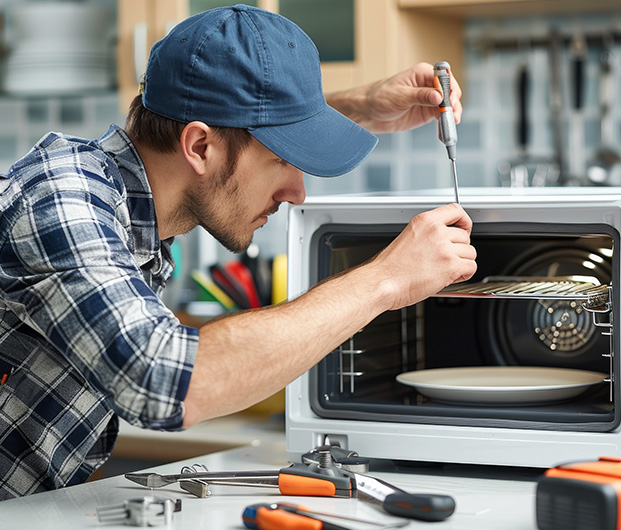
When an appliance breaks down at home, the first thought for many people is simple: “Maybe I can fix this myself.”
It makes sense. Online videos make repairs look quick and easy. A few tools, a couple of screws, and the problem seems solved in under ten minutes.
The problem is that what looks easy in a video does not always reflect the reality of appliance repair. Modern appliances have electrical components, sensors, control systems, and safety features working together behind the scenes. What starts as a “quick fix” can turn into a much more complicated problem once the appliance is opened up.
Understanding the risks of DIY appliance repairs can help you decide when a simple task is manageable and when it is better left to a professional.
Modern appliances are much more advanced than they may look from the outside.
A washing machine, for example, is not just a drum and a motor. Sensors, pumps, control boards, locks, valves, and other components all work together to complete a cycle. Refrigerators, dishwashers, dryers, and ovens have their own interconnected systems.
When one part fails, the source of the problem is not always obvious.
A visible symptom may be caused by something completely different deeper inside the appliance. Without the right diagnostic knowledge, it is easy to replace the wrong component while the original problem remains.
One of the biggest concerns with DIY appliance repair is electrical safety.
Simply unplugging an appliance does not make every internal repair safe. Certain electrical components can retain stored energy, and opening panels or handling wiring without understanding the system can create a risk of electrical shock or damage to the appliance.
Incorrectly reconnecting wires can also create additional problems. A mistake may damage a control board, cause the appliance to malfunction, or prevent it from operating altogether.
Electrical repairs are one area where guessing is never worth the risk.
A lot of DIY repairs begin with an assumption.
The dishwasher is leaking, so it must be the seal. The dryer is not heating, so the heating element must be broken. The fridge feels warm, so the thermostat must be the problem.
But appliances can show the same symptoms for several different reasons.
A leak could come from a hose, pump, valve, seal, or connection. A dryer that does not heat may have an issue somewhere else in the heating or control system. A refrigerator temperature problem can have several possible causes.
Replacing parts based on symptoms alone can quickly become expensive, especially when the first guess is wrong.
Another risk of DIY appliance repairs is choosing the wrong replacement part.
Two components may look nearly identical while being designed for different appliance models or specifications. Small differences in compatibility, electrical requirements, or design can affect how the appliance operates.
Using parts specifically intended for the appliance model helps ensure everything fits and functions as designed. Otherwise, you may replace one problem with another and find yourself taking the appliance apart again a few days later.
DIY repairs can also become an issue when an appliance is still under warranty.
Warranty coverage varies between manufacturers and models, so it is important to check the terms before attempting a repair. Damage caused during an improper repair may not be covered, leaving the homeowner responsible for the additional cost.
There is also the cost of trial and error.
Buying one replacement part, discovering it was not the problem, and then buying another can quickly turn an inexpensive DIY project into a costly one. If the repair causes additional damage, the final professional repair may be more involved than it would have been originally.
Not every appliance issue requires a major repair. There are basic maintenance and troubleshooting steps homeowners can safely handle themselves, such as cleaning filters or checking settings according to the manufacturer’s instructions.
But when the problem involves electrical components, internal parts, repeated error codes, unusual sounds, leaks, or a fault you cannot confidently identify, professional diagnosis makes sense.
A trained appliance technician has the tools and experience to determine what is actually causing the problem rather than replacing parts based on guesswork.
At Liberty Appliance Repair, we understand why fixing an appliance yourself can be tempting. But when a repair goes beyond basic troubleshooting, getting professional help can save you time, frustration, and the cost of making the problem worse. Our team will diagnose the issue and get your appliance back up and running safely and reliably.
Contact Us
Fast, affordable, and trusted oven and stove repair across Surrey, Langley & North Delta. Trust Liberty Appliance Repair for precise diagnostics and reliable results.
book your appliance repairour services
Call: (604) 813-6382